Graduate Education

Since 1990, the LRC has offered the Master of Science in Lighting degree for those interested in a multidisciplinary education in lighting. During the early 2000, a doctoral program was also established. Whether you are a recent college graduate, an early career professional, or looking to start in the lighting industry, the M.S. Lighting program will prepare you for a career in lighting design, engineering, manufacturing, research, general lighting practice, or higher education.
M.S. in Lighting.
This graduate program is suitable for those with a background in physics, engineering, architecture and design fields.
The curriculum covers a broad range of topics meant to bridge technical knowledge with design application. Core areas of study generally include:
Lighting Technologies & Applications: Students analyze light sources (LEDs), luminaires, and controls, learning to select components that meet specific project objectives.
Physics of Light: Courses cover the fundamental science of light, including optics, radiometry, and colorimetry.
Photometry: This includes the measurement and quantification of light parameters, such as illuminance, luminance, and luminous flux. Students learn to use photometric data files to simulate lighting performance.
Human Factors: This area examines the visual, biological, and psychological impacts of lighting, including human sensitivity to light, circadian rhythm, and visual comfort.
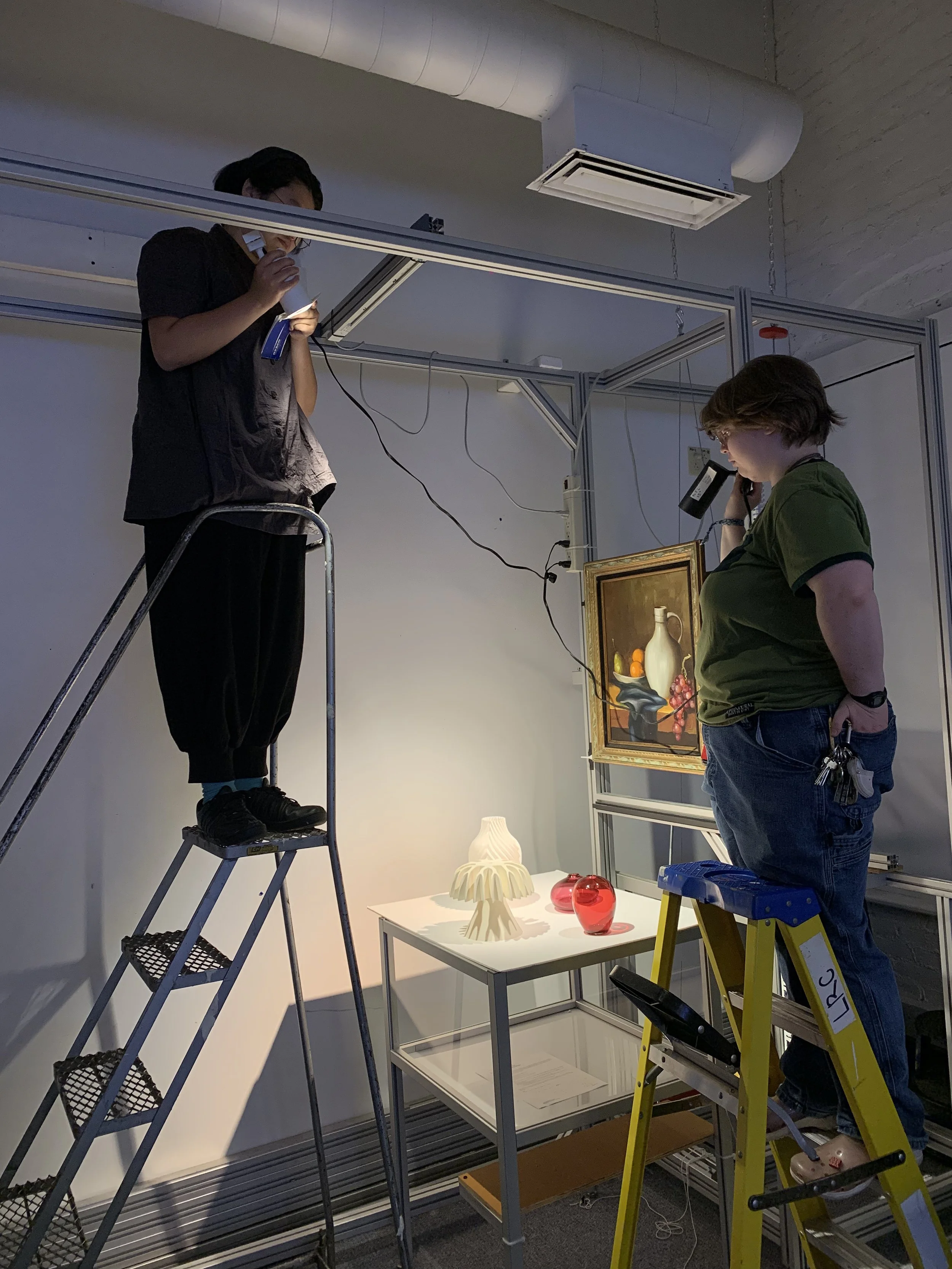
Lighting Design & Workshop: Students engage in hands-on studios that balance conceptual and practical techniques for commercial, residential, or outdoor applications, often using CAD/BIM tools.
Final Master's Project: A culminating experience where students work closely with faculty to conduct in-depth research or design in a specialized area.
The Lighting Research Center is currently accepting applications for the 9-month M.S. in Lighting program. The 9- month program includes a Fall/Spring semester course work and an independent MS project. The students can choose to participate in an optional 3-month paid summer internship before graduation as part of the Lighting MS program.
Ph.D. in Architectural Sciences with a Concentration in Lighting.
If you already have a graduate degree and want to dig deeper into topics of lighting quality and technology, join us and research strategies to improve aesthetics, efficiency, and sufficiency of anthropogenic light in support of all life on earth.
The Lighting Research Center is currently accepting applications for the Ph.D. program in Architectural Sciences with a Concentration in Lighting.
Internship as part of the MS in Lighting program
Students can choose to participate in a 3-month paid summer internship before graduation as part of the Lighting MS program. This potential internship will take place during the summer following the instructor-led courses in the fall and spring semesters. The LRC creates opportunities for the students to network with potential internship hosts. In addition, the LRC may also offer qualified students a paid summer research internship at the LRC’s laboratory in Troy, NY.
Internship Hosts
The following organizations are potential hosts for the summer internship position for the MS in Lighting students. The LRC thanks them for their participation.
Career Opportunities After Graduation
Lighting is a multidisciplinary topic cutting across many fields. In the M.S. in Lighting program, students learn a broad array of topics such as electronics, optics, thermomechanics, 3D printing, sensors, metrology, lighting design tools and strategies, and entrepreneurship through classes such as Lighting Technologies & Applications, Physics of Light, Lighting Workshop, Lighting Design, Human Factors, and in the execution of their final master's project. This foundation allows students to seek employment in various fields within the lighting industry as well as in semiconductors, electronics, software, 3D printing, and engineering companies.
Our graduates have gone on to industry careers in technology, design, and manufacturing, as well as to Ph.D. research programs and complementary educations, for example medical school. A few of these companies include:

Graduates have also gone on to work in federal and state government agencies and university and national laboratories.
For more information, please contact us or visit the RPI graduate admissions website to start your application.
Thank you for considering the LRC!