
Short Course on 3D-Printing for Lighting
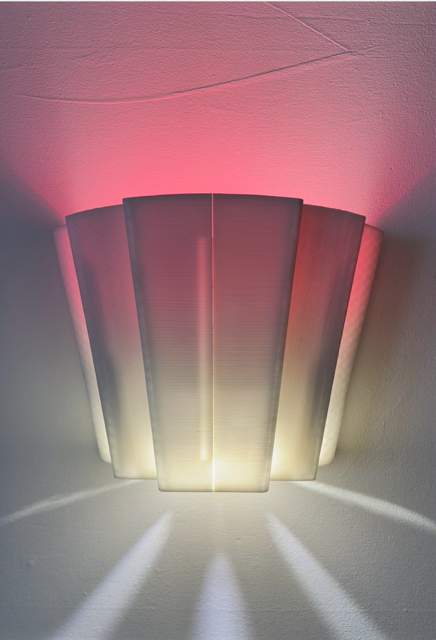
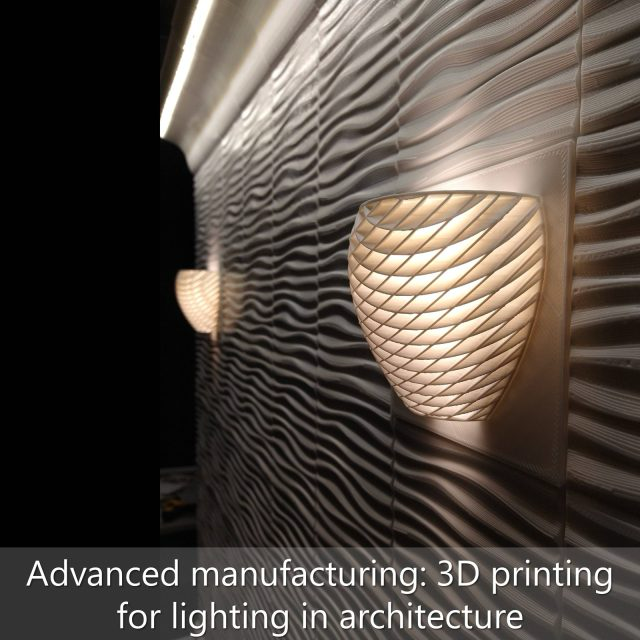
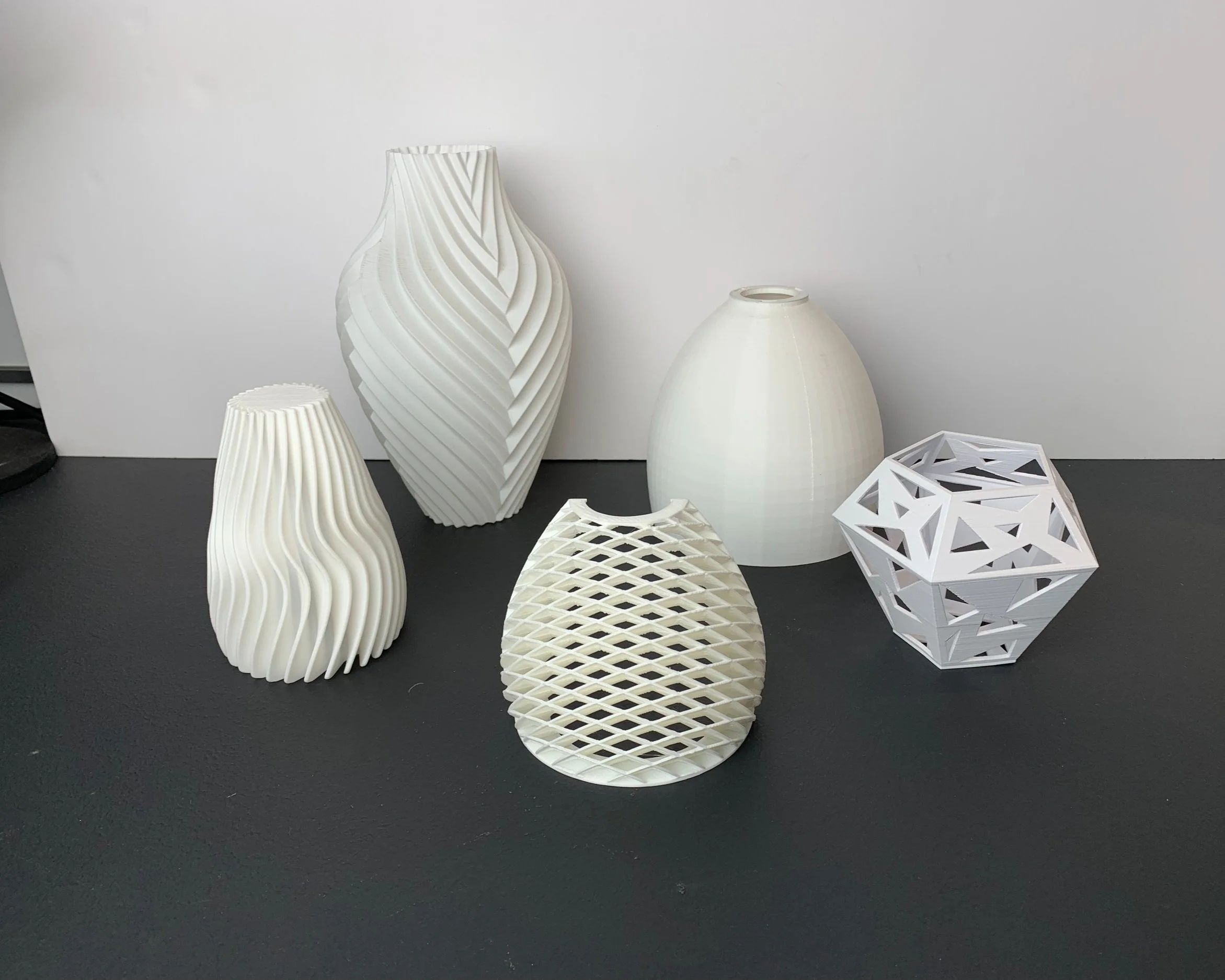
"The Lighting Research Center (LRC) at Rensselaer Polytechnic Institute offers a professional development course in 3D printing for the lighting, taught in partnership with leading 3D printing organizations like Signify, Stratasys, and HP. This hybrid course, combining online instruction with hands-on laboratory work, teaches lighting professionals to design specifically for 3D printing, prototype, and manufacture unique lighting systems and components using advanced additive manufacturing techniques with appropriate machines and materials enabling creation of novel designs not possible with traditional methods. Additionally, the participants will learn from successful case studies, what applications can benefit from 3D printed custom systems. "
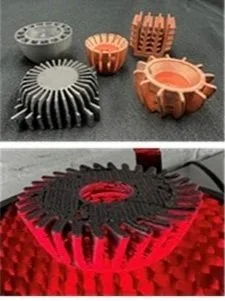
Dates for the next course will be announced soon.
Who should take the course?
Professionals from the lighting industry interested in learning more about the use of 3D printing in the design, development, and manufacturing of lighting components and products.
Professionals from the 3D printing industry interested in the application of 3D printing technology to lighting.
Anyone who wants to better understand the possibilities and impacts of 3D printing in lighting product lines, including:
Equipment and materials manufacturers
Product and innovation managers
Industrial designers
Engineers
Product developers
Research and development professionals
Course Objectives
At the conclusion of the course, attendees will be able to:
Appraise the value of 3D printing for manufacturing lighting systems
Understand the 3D printing process from design to manufacture and post-production of components as it applies to lighting systems
Understand the performance requirements of electrical, mechanical, optical, and thermal components in lighting systems; and the needs of different lighting applications
Compare the most common methods of 3D printing processes and technologies, and the pros and cons of each related to the fabrication of various lighting components
Assess material, print parameters, and finishing requirements for lighting fixture components and systems
Design a 3D-printed component for a lighting fixture and learn the steps involved to characterize and optimize the designed component
Understand the process that goes into testing, evaluating, and quantifying the performance of 3D-printed lighting components
Course Certificate
Participants who successfully complete the course will be awarded a certificate from the Lighting Research Center including 15 continuing education units (CEUs).
Course Description and Schedule
There will be three weekly (approximately 2.5-hour) live, interactive sessions hosted by course faculty via an internet-based conferencing system, as well as supplemental activities and assignments to be completed by course participants throughout the five-week course period. Industry leaders from HP, Signify, and Stratasys will join LRC faculty to present updates on the state-of-the-art of additive manufacturing technologies.
Course participants will work interactively with course faculty in live, remote laboratory sessions. Participants will also design components that will be additively manufactured at the LRC and returned to participants for evaluation as part of the course sessions.
A more detailed schedule of course activities, presentations, and assignments will be provided upon registration for the course.
An overview of the course content is included below.
Faculty
Indika Perera, PhD — Dr. Perera is a research scientist at the LRC. His research interests include thermodynamics, heat transfer, material characterization, and additive manufacturing of solid-state lighting components and systems. Dr. Perera’s expertise is in the thermal management of LED lighting systems and of phosphor and down conversion materials used in LED packages, including the development of a mathematical model for predicting the temperature distribution in an LED phosphor layer. His current research includes investigations of the thermal properties of 3D-printed heat sinks and components for use in LED lighting systems, characterizations of composite materials used in additive manufacturing, and analysis of theoretical models for predicting the thermal conductivity of 3D-printed components.
N. Narendran, PhD — Dr. Narendran is a professor and director of research at the LRC. He is well known for his pioneering research in the field of solid-state lighting, including LED performance improvement through novel packaging, development of accelerated life-testing methods, and the use of LEDs in high-value lighting applications. His current research focuses on 3D printing for lighting, specifically investigations of the functional properties of materials to produce components for lighting fixtures, including mechanical, thermal, optical, and electrical subcomponents. Additionally, Dr. Narendran organizes the Additive Manufacturing for Lighting Consortium at the LRC, which brings together key stakeholders from the 3D printing and lighting industries to work collaboratively to revolutionize lighting manufacturing. Through these activities, Dr. Narendran and his research group are leading the lighting industry transformation to supply on-site, on-time delivery of cost-effective lighting components and fixtures, and thus changing the current lighting practice. Dr. Narendran has authored more than 130 articles in archival journals and proceedings and holds over 50 patents. He is a Fellow of the Illuminating Engineering Society of North America and a member of the committee on the assessment of solid-state lighting for the National Research Council of the National Academies.
Jean Paul Freyssinier, MS — Professor Freyssinier is a senior research scientist and adjunct assistant professor at the LRC. His research includes solid-state lighting, LED performance, technology transfer, energy-efficient lighting design, photometry, the spectral effects of lighting, and education. Since 2000, he has been involved in lighting technology research, development, and evaluation at the LRC. His previous experience includes working as principal of design at a full-service architectural lighting and automation design firm and as project manager at an energy management firm. He has taught in the LRC's graduate education program for nearly 25 years and lectures frequently at conferences and seminars. He is the author of more than 35 scientific and technical articles related to energy efficiency, photometry, improved LED performance, and field applications, and co-author of six patents on LED remote phosphor technology.
For more information
Please contact LRC's Director of Research, N. Narendran, at narenn2@rpi.edu to learn more.